

Shiny Happy People
Wellbeing and life coaching is a massive industry. There is a wealth of self-help advice, influencers, blogs, newsletters, and books out there, all with their own theories on what it takes "to be happy".
But is "happiness" even measurable? Is it relative? Is it something that can be learned or are you just born with it? Does it depend on our circumstances - is the concept of happiness still fair to someone living in terminal ill health, or in a war torn country, or so poor they do not have food, water or shelter?
On that last point it does seem a little conceited to talk of happiness when many in the world do not have the chance to ponder such an ideal. It puts me in mind of Maslow's Hierarchy of Needs illustrated below:
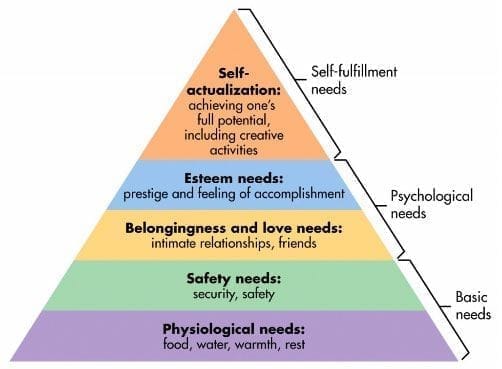
Maslow's pyramid suggests that human needs must be met in order from bottom to top. You are only in a position to attain your "higher" psychological and self fulfillment needs (including arguably "happiness") after your basic needs of food, water, shelter, safety and security are secure.
However despite these practical limitations there does appear to be some degree of consensus about what it takes to achieve happiness, with the same subjects cropping up over and over. The following list of characteristics of happy people have been identified:
They devote a great amount of time to their family and friends, nurturing and enjoying those relationships
They are comfortable expressing gratitude for all they have
They are often the first to offer helping hands to coworkers and passersby
They practice optimism when imagining their futures
They savour life's pleasures and try to live in the present moment
They make physical exercise a habit
They are deeply committed to lifelong goals and ambitions
Last but not least, the happiest people do have their share of stresses, crises, and even tragedies - but they show poise and strength in coping with challenges.
The last one in this list is often contested. For those of us who can take basic needs for granted, and are lucky enough not to have had serious crises or tragedies in our lives, can we credibly preach to those that have appeared to have had a hard or unlucky life and are justifiably able to say... "it's alright for you with your nice family, house and money living in your idilic world, but if you were in my situation and had experienced what I have...?"
However despite this oft repeated argument, studies have shown that the pattern of happiness (or unhappiness) is consistent throughout the list such that a happy person will usually display all of the above characteristics and will recover and maintain their core happiness even after life changing events (at least in the longer run).
A fundamentally unhappy person is more likely to display the opposite characteristics and see the bad in everything and everyone, and furthermore blame outside influences for their woe.
You are what you think, you attract what you give out, and you notice what you choose to focus on whether that is the "good" or the "bad".
FEATURED POSTS...



IMPORTANT: PLEASE REFER TO THE TERMS AND CONDITIONS INCLUDING MEDICAL DISCLAIMER BEFORE ACTING UPON INFORMATION CONTAINED IN THIS WEBSITE