

Professor Plumber in the Study with the Lead Piping
This week a plumber visited my home to fit a stop valve on our water system. The water mains supply into the house was discovered to be lead piping. On thinking about this it is not surprising. Like many houses in the UK, and in Brighton especially, the house is over 100 years ago. In fact lead piping was commonly used in the UK up to the 1960s and generally much later in the US.
If you live in an older property, your supply pipe - the underground pipe that connects your home to the public water mains - could be made of lead, and there's also a good chance that there may be some lead pipes inside your home. Old homes can have lead service lines, indoor plumbing with lead content, lead solder, leaded copper pipes, lead lined storage tanks, and even lead fixtures.
Is Lead Harmful? Health Risks of Lead Pipes in Drinking Water
The human health risks which relate to how lead can build up in the body have been studied extensively and are generally well understood. Lead is a highly toxic metal and a very strong poison which can lead to serious, irreversible conditions, which can sometimes be fatal. It can cause severe mental, physical, and behavioural problems, that can build up over a number of years.
The U.S. Environmental Protection Agency (EPA) states that lead is the most serious environmental health hazard for children under 6 years old in the US. Young children are most vulnerable because their brains and nervous systems are still developing - lead can have an adverse impact on mental development and children's rapidly growing bodies absorb lead more quickly.
It has been estimated that infants get half of their lead exposure from drinking water.
Excessive amounts of lead may place adults at higher risk of cancer, stroke, kidney disease, memory problems and high blood pressure. Lead can cause premature birth, reduced birth weight, seizures, hearing loss, behavioral problems, brain damage, learning disabilities, and a lower IQ level in children.
In addition to piping lead can be present in lead-based paints, including paint on the walls of old houses and toys. It can also be found in art supplies, contaminated dust and some gasoline products, some jewellery, pottery, contaminated soil, batteries and even some cosmetics.
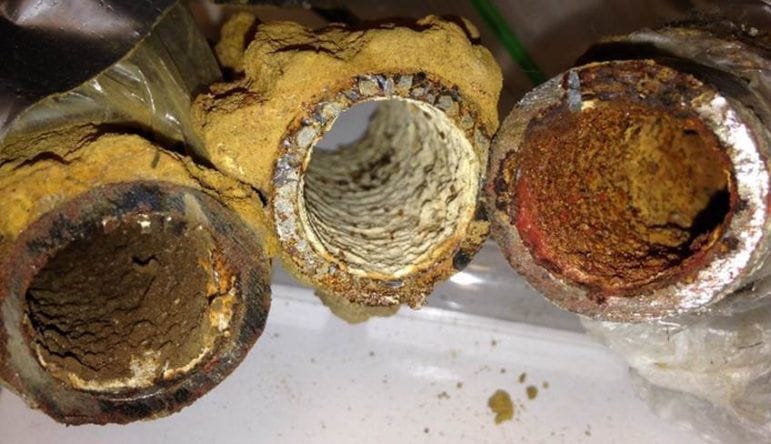
You wouldn't really want your water coming through these pipes would you?
From the 1970s onwards domestic uses of lead have been prohibited across Europe. As a result of health concerns, the UK Government banned the use of lead in many products, and it has not been used for water pipes since 1970. The Government also advises that we should minimise our exposure to lead from all sources, including drinking water.
How Does Lead Contamination get into UK Tap Water?
Occasional lead occurs naturally in groundwater. However, this is a rare situation in the UK and lead is not present in the water within our wider public water supply network. Furthermore if your home has been modernised since 1970 and all of the pipes from the water company's stop valve outside your home to the kitchen tap replaced, there should be no lead piping on your property.
However before 1970, many smaller water pipes were made from lead. It is therefore very likely that in older properties part, or all, of the underground service pipe connecting the water main in the street to your kitchen tap may be made from lead. It is also possible that some original lead plumbing remains within older properties especially if the kitchen has not been modernised.
In hard water areas the scale that forms on the inside of pipes protects against the dissolution of lead from the pipe into the water. However in soft water supply areas there is a greater likelihood of lead from pipes being present in the water.
Another source of lead in drinking water is the illegal use of lead based solder to join together sections of copper pipe. Lead solder is still sold for use on closed central heating systems and mistakes occasionally happen whereby unqualified plumbers or householders use lead solder on drinking water pipes contrary to the regulations.
Lead can also corrode from metal faucets and fixtures made from brass, an alloy of copper and zinc that often contains lead impurities, including chrome-plated brass fixtures. Brass fixtures can leach lead even in homes with plastic water lines. Solder is an alloy of tin with lead, antimony, or silver. Lead may also originate from the corrosion of brass fittings on certain types of submersible pumps used in groundwater wells.
For any of these reasons, the amount of lead in drinking water at a particular property may sometimes be above the health based standard.
How to Check for Lead Pipes
Inside your home
Look in or behind the cupboards in your kitchen. You may also need to look in other places, eg. the cupboard under the stairs. Find the pipe leading to the kitchen tap. Check if it is lead along as much of its length as possible. Unpainted lead pipes appear dull grey. They are also soft and if they are gently scraped you will see the shiny, silver-coloured metal beneath. You can ask a plumber to carry out this check for you.
Outside your home
Open the flap of the stop valve outside your property. Examine the pipe leading from the stop valve to the property. You may need to ask your water company or a plumber to carry out this check for you as in some cases as access may be difficult.
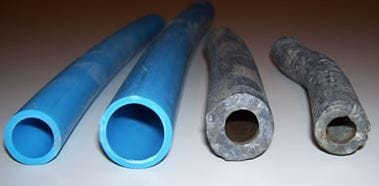
Lead piping on the right
Other pipe materials in common use are:
• copper - bright, hard and dull brown
• iron - dark, very hard and may be rusty
• plastic - typically blue but if older may be grey or black.
How Can I Find Out if There is Lead in My Drinking Water?
If you suspect that your home has lead pipes you can ask your water company to test the water at your kitchen tap for lead. Water companies take daily samples from consumer taps for lead at random and they will give you a report of this testing in your local area (water supply zone) free on request. They will also tell you whether they are treating the water to minimise the likelihood of lead pick up. Your water company will be aware of and will tell you if you live in an area with a history of lead pipes having been used and not removed.
Since lead poisoning in water is colourless, odourless and tasteless, the only way you can be sure is to have your water tested.
You can also have your water sampled by a private laboratory for which there would be a charge and this can be through your local authority environmental health service. If you live in social housing or you are a tenant, your first point of contact for further advice is also environmental health.
What Do I Do if Lead is a Problem in My Property?
Water acts to dissolve lead from pipes and solder while the water is in contact with the plumbing. Therefore, lead concentrations in drinking water usually are the highest in the first water out of the tap; they decrease as the water is run. If lead pipes, leaded solder, or brass fixtures are present, even relatively noncorrosive water can dissolve dangerous amounts of lead if the water sits in contact with these materials for an hour or more.
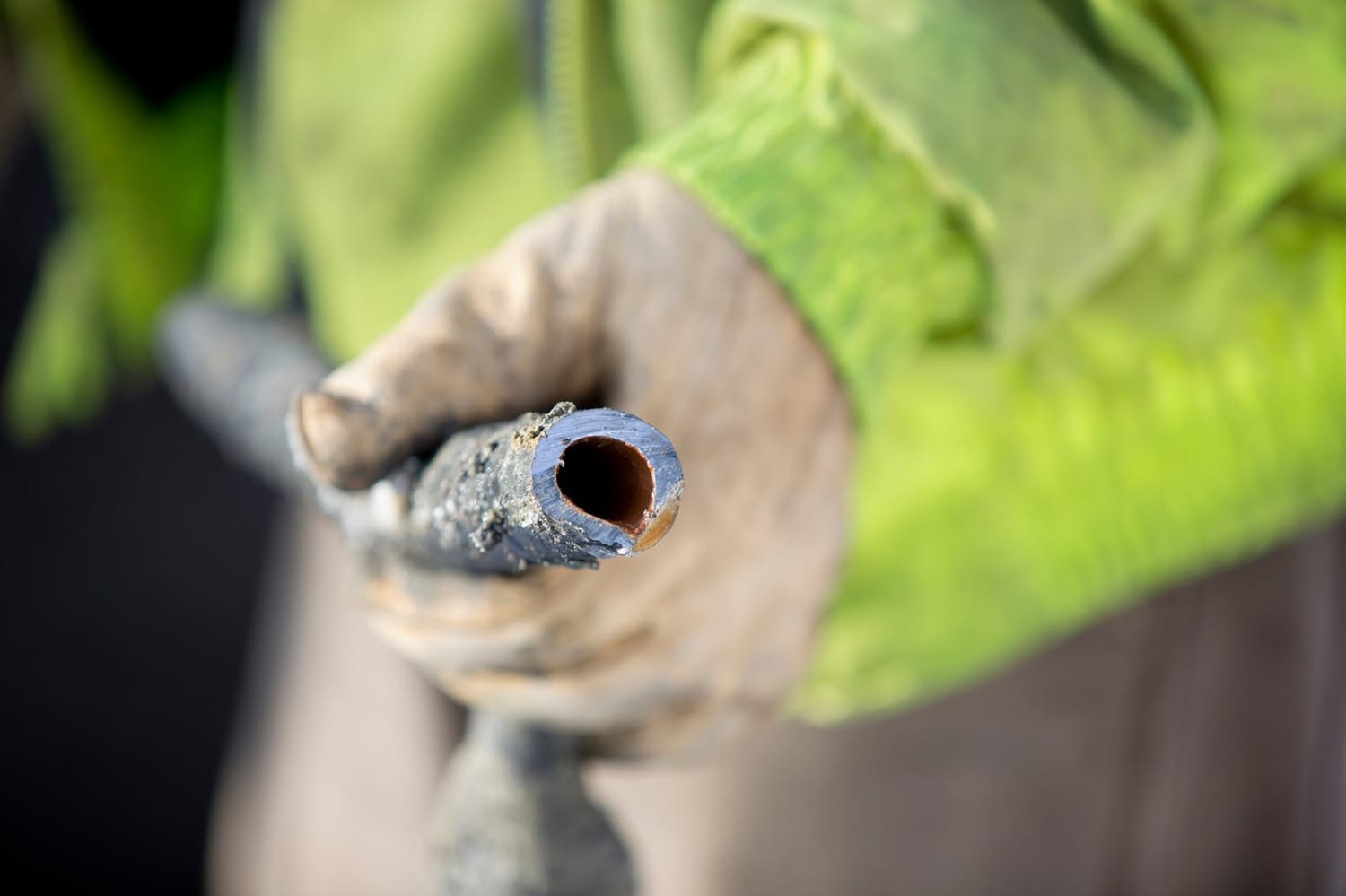
Lead piping example in old UK home plumbing
In the short term if tests have confirmed a risk then you should not drink water that has been standing in the pipes for long periods, for example, overnight, or if no one has been at home during the day. Instead, before you draw off water for drinking and cooking, put the plug in the sink or put a kitchen bowl under the tap, and let the tap run until the sink or bowl is full. This amount will remove standing water in a pipe of up to 40 metres in length. You can then use the kitchen tap as normal.
The above short term measure will protect you and your family but it is a waste of water (unless you can pour on the garden) and you should take steps as soon as practicable to replace the lead pipes between the stop valve outside your home and your kitchen tap.
When arranging for this you should notify your water company because they may be legally required to replace their communication pipe if lead levels are above the safe standard - in the UK this is measured as a maximum of 10 µg/l (10 microgrammes per litre). By way of comparison in the U.S. the EPA set the maximum allowable concentration of lead in public drinking water at 15 µg/l.
Tests carried out in the US found that out of 872 first-draw lead tests from 2007 through to 2015, 16% exceeded the 15 µg/l drinking water standard. Of the 1,346 samples that were tested after the water had been run, only 3% exceeded the 15 µg/l level suggesting that most high lead levels were occurring due to corrosion of metal plumbing. It is not uncommon for lead readings from taps drawing on old little used plumbing to exceed the safe levels by multiple factors. A report on schools in Wisconsin, USA, found measurements as high as 740 µg/l - many times above the safe level!
Measurements and standards are helpful but since lead serves no beneficial purpose in the human body, it is best if drinking water contains no lead at all.
Longer term it is of course best to replace any lead piping in and around your house if this is practical. When replacing lead pipes make sure this does not reduce electrical safety by removing any earthing arrangements dependent on the pipes. Ask your electricity supplier if in doubt. Some local authorities offer assistance with removal of lead pipe from social housing.
Who is responsible for the pipework?
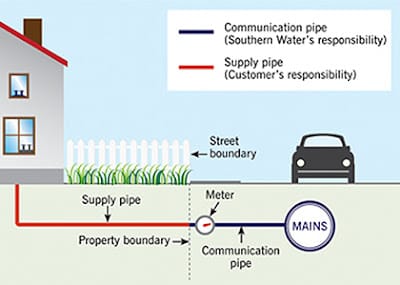
The part of the service pipe that links the water main in the street to the stop valve (or the meter) outside your property belongs to the water company. This is known as the communication pipe.
The part of the service pipe leading from the stop valve outside your property to the point where it enters your home is the responsibility of the owner. This is known as the private or supply pipe.
All the plumbing inside your home to the kitchen tap is the responsibility of the property owner.
However in some cases the water company will be responsible for replacing lead piping leading up to the house if lead levels are above the legal limit.
Other Solutions - Best Water Filters for Lead Removal UK (including Water for Health)
Acid-neutralizing filters can be installed to reduce water corrosivity by adding calcium and by increasing the pH of the water. Unlike other treatment options, these filters act to prevent lead from entering the water rather than removing it at the tap. In addition to reducing acidity, the added hardness produces a thin scale inside the pipes that reduces lead corrosion. These units normally cost over £1000 and may cause a noticeable increase in the hardness of your water.
Contrary to some claims, water softeners are not recommended for lead removal. Softeners are inefficient lead removal devices, and they are usually installed in the plumbing system ahead of the piping and fixtures where most of the lead originates. Also, softened water is usually more corrosive than un-softened water.
Reverse osmosis units and activated alumina filters are very effective in removing lead once it is in the water. These units typically are attached to the kitchen tap and treat only the water from that tap. Costs vary from £300 to more than £1,000. However reverse osmosis units of this size can produce only a few gallons of treated water per day, with a huge amount of waste too.
Distillation units, also normally placed on the kitchen counter, are effective in removing lead from drinking water. However, they are relatively expensive to operate and produce only a gallon or so of water per day, depending on their size.
Other treatment devices such as granular activated carbon (GAC) filters can remove lead, but their efficiency is questionable. Small, inexpensive counter-top filter units are often marketed for lead (and fluoride) removal but consumers should check claims can be substantiated.
It is also important to note that small counter top units are limited in the amount of time that the filter is effective in removing lead. A National Sanitation Foundation (NSF) seal (and ANSI in the US) on treatment equipment is one method of ensuring that the unit has been tested for adequate removal efficiency. A NSF seal does not guarantee, however, that the filter will be effective after many months of continuous use, and filter replacement is always required periodically.
If you have a maintained Water for Health filter you don't have to worry about lead. The Energy Plus model I recommend uses a unique 4-stage system for high contaminant removal (>99% fluoride, chlorine, lead, heavy metals, microplastics and pesticides), while transforming water into a structured, alkaline (pH 8–9.), hydrogen-rich, antioxidant form with added minerals (calcium, magnesium and potassium).
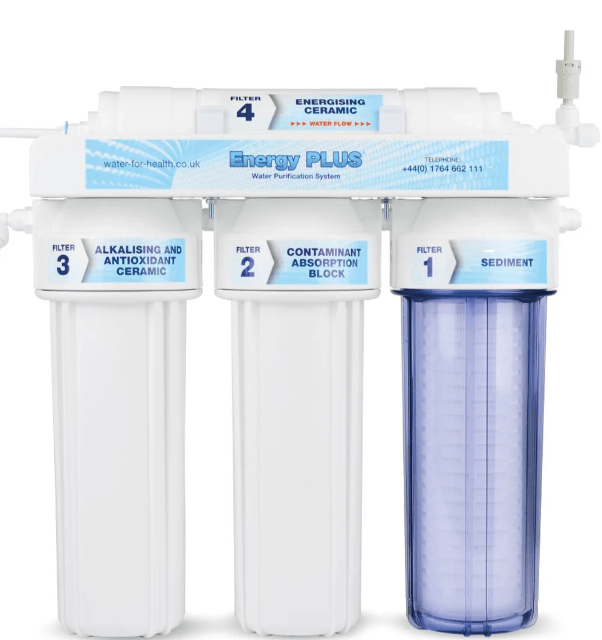
The Energy Plus Water Filter from Water for Health
This filter is NSF/ANSI (regs 42 and 53) compliant.
NSF/ANSI 42 (Aesthetic Effects): Focuses on making water taste and smell better, reducing chlorine (taste/odor) and particulates.
NSF/ANSI 53 (Health Effects): Deals with contaminants that pose serious health risks, such as lead, mercury, cysts, and Volatile Organic Chemicals (VOCs).
This gives assurance that whatever the extent of your potential lead piping under your house your drinking water will be safe.
If you are interested in investing in one of these machines (or any other Water for Health products) please visit their website using my affiliate link below. Apply code NE005 at checkout to receive a 5% discount. As an affiliate, I may earn a small commission at no extra cost to you.
FEATURED POSTS...



IMPORTANT: PLEASE REFER TO THE TERMS AND CONDITIONS INCLUDING MEDICAL DISCLAIMER BEFORE ACTING UPON INFORMATION CONTAINED IN THIS WEBSITE